


April 14, 2008.
That is the date of the last NBA game played in Seattle. A lot about the league has changed since then. Some of the superstars of the mid 2000s are no longer in the league, new stars have emerged, and the style of play has also drastically changed.
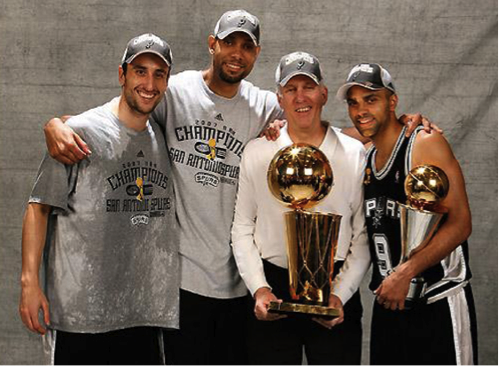
One thing remains the same though; the Spurs are still the Spurs.
Many stars from the mid and late 2000's era have seen their careers end due to injury. Tracy McGrady was an absolutely electric scorer who was capable of dominating any defense in the league any given night during the first part of the decade. Then, McGrady's body betrayed him. In the 2008-09 season he played in a mere 35 games, his back injury that had originated in the 2005 season reemerged with a vengeance.He would never be the same. The 08-09 season was the last time McGrady would average double digit points, he bounced around the league until retiring at the end of the 2013 season after a short stint with the San Antonio Spurs. McGrady retired as a shell of his former high flying self, and it's a shame.
A player who can relate to McGrady's pain is hometown hero Brandon Roy, whose story might even be more depressing. Roy was voted rookie of the year after averaging 16.8 points and 4 assists per game. Roy is remembered for his crafty drives to the rim, where he shot a very solid 60% for his career, his silky smooth pull up jump shot, and of course, his heroics. In 2007 the Portland Trail Blazers drafted Ohio State's Greg Oden with the first overall pick. With a young core of Roy, Oden and power forward LaMarcus Aldridge, the Blazers looked destined to dominate the Western Conference for years to come. However, it was not to be. Oden had to have season ending knee surgery before playing a game that year, and ended up only playing in 82 games during his three years in Portland.
Roy was also bit by the injury bug, which would eventually derail his very promising career. In April of the 2009-2010 season Roy underwent surgery to fix a meniscus tear in his right knee, which the doctors believed would cause him to miss the first round of the Western Conference playoffs. However, Roy rushed back after only eight days of recovery. Roy would never return to all-star form, as he was forced to undergo surgery on both knees the following season. Just before the beginning of the lockout condescended season, Roy announced his retirement from the game of basketball on account of his degenerative knees. By the end they had gotten so bad he no longer had any cartilage left in either knee. Roy was a promising young talent who looked destined for stardom; his short six year career and early retirement was simply heartbreaking for NBA fans, and especially Blazers fans.
Many other great players from the 2000's have seen their careers end on account of injuries, old age, or a diminishing skill set. Don't get too down though; there are an abundance of young stars putting their own mark on the game today.
Athletic freaks such as Russell Westbrook, Derrick Rose, and Eric Bledsoe, dazzle on a nightly basis with their ferocious dunks, lightning speed, and incredible quickness. These players are redefining the point guard position, never before has the league seen such athletic players running the point.
Player Stephen Curry, Damian Lillard, and Kyrie Irving are also changing the position in their own way. All three are threats from down town, especially Curry who boasts a very impressive 43.8% from deep. Through his first five years in the league, Curry has made 905 threes, setting a new record in the process. Remarkably, Lillard is currently on pace to break Curry's record. All three players possess great pull up three point jump shots, floaters, and deadly ball handling skills. They all also have great court vision, and can make their teammates around them better.
Behemoths like former Sonic Kevin Durant and Anthony Davis, are redefining basketball. As Sonics fans know, Kevin Durant moves unlike any other 6'9 human being in the world (that we know of, anyway). Durant's ability to play essentially exclusively on the perimeter, destroying defenses in a way that looks seemingly effortless.
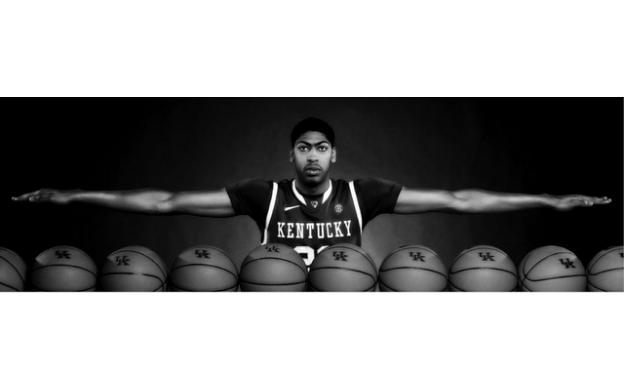
Davis is a once in a generation athlete, listed at 6'10 and has an amazing 7'5.5" wingspan. As a junior in high school he was a 6'3 point guard, by his senior year he had shot up to 6'10. Because of this, he is able to feel comfortable stretching out to the perimeter despite playing either the center or the power forward position for the Pelicans. Davis helped lead the United States to a gold medal in the 2014 FIBA world cup, and looks destined to become the next superstar in the NBA. Also, don't try to score on the brow.
The league has also experienced a shift in offensive philosophy, thanks to analytics
The rise in analytics over the past decade has caused NBA teams all across the NBA to change the way they look at the offensive side of the game. 26 teams currently employ or consult with statistical and basketball analytic professionals, according to NBA Stuffer. An emphasis on three point jump shots, especially corner threes, shots at the rim, and a limitation on long two point jump shots, are all ideas that have been pushed by proponents of analytics for years. Recently, these ideas have become mainstream for most NBA teams.
This type of offense has introduced the idea of the "Stretch four." In the ever important quest for spacing, coaches are moving towards playing Power Forwards who may be slightly undersized, but who can shoot the ball from behind the three point line. Players like the New Orleans Pelicans' Ryan Anderson, Cleveland Cavaliers forward Kevin Love, and Dallas Mavericks forward Dirk Nowitzki, have become incredibly valuable commodities.(Side note: I am certainly not saying that these players are only valuable because of their shooting ability, they just best represent the change in offensive philosophy). Today, teams that play two big men who like to pound the ball inside and dominate both blocks, such as the Memphis Grizzlies,are no longer the norm.
Oh yeah, sleeved jerseys are also a thing now, unfortunately.
A lot has changed since the Sonics last took the floor in Seattle. The league looks much different than it did 7 years ago, new stars dominate the spotlight, and the style of play has changed.
If you have been too angry to watch a game since the Sonics left, I don't blame you. Just know that when the Sonics return, the NBA will look much different than it did in 2007.





Connect with Sonics Rising